
Panama
“Puente del mundo, corazón del universo: Bridge of the world, heart of the universe..”
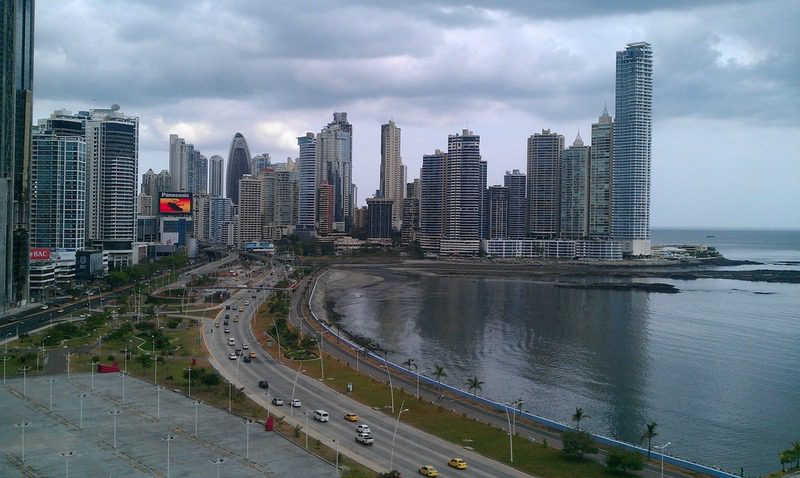
“Panama is the southernmost country in Central America and is bordered by Costa Rica and Colombia. Unlike other Central American countries, Panama actually runs east and west, rather than north and south. It is an isthmus, forming a link between North and South America and bordered by the Caribbean Sea to the north and the Pacific Ocean to the south.
” I Cor 4:4
Panama is the narrowest of all the Central American countries and is 37 miles wide at its narrowest and 110 miles at its widest. Its narrowest section is what prompted the building of the infamous Panama Canal in 1881, connecting the Pacific Ocean to the Caribbean, and saving ships days of having to go down and around the tip of South America.
Panama is also home to the Pan-American Highway, the longest highway in the world, stretching 19,000 miles from Alaska to Panama.
Population:
Currently, Panama has a population of 3.8 million.
In the 16th century, when the Spaniards first came to Panama, the island was occupied by various Native American groups. The population soon included persons of mixed Spanish and Indian ancestry called mestizos. During colonial times, Africans were brought to Panama as slaves, and other mixed ethnic groups developed as they were incorporated into society. With the construction of the railroad during the 19th century, immigrants arrived from North America, France, and China. Canal construction further fostered immigration by attracting large numbers of West Indians, Americans, Spaniards, Italians, and Greeks.
Today, the mestizos make up about 65% of the population in Panama. Native Americans account for about 12.3%, those of African descent make up 9.2%, mulattos account for 6.8%, and Caucasians 6.7%
Culture:
Panama is a cultural melting pot, a blend of African, American Indian, Asian, Caribbean, Middle Eastern, North American, and Spanish influences. This is especially true in the areas near the canal where more than half the population lives. Caribbean influence is strongest along the northern coast and among the Afro-Panamanian population. U.S. influence is strongest among the urban middle and upper classes; these groups typically speak English and Spanish, use the Internet and cell phones, have greater opportunities to travel abroad, and consume expensive imported goods. Major economic and social inequalities exist, and most Panamanians in isolated rural areas continue to be poor and to have traditional lifestyles.
Panamanian food reflects the nation’s multinational background, particularly its Colombian, U.S., and Caribbean influences. Rice, beans, and corn are staples, along with seafood, tropical fruits, and vegetables. Two chicken dishes, arroz con pollo and sancocho, are considered national favorites. Panama also boasts its own versions of the ceviche, tamales, and empanadas.
Panama is known for its joyful, music-rich religious festivals and for holidays such as its pre-Lenten Carnival, marked by carefree dancing and drinking.
For all its diversity, Panama’s dominant culture has Spanish origins. The family is all-important, respect is valued, machismo is a way of life for most men, and Catholicism is prominent.
Spiritual Need
Roughly 85% of Panamanians are Roman Catholic. Since its introduction by the Spanish in the 16th century, Catholicism has thrived, and its influence can be seen today in the country’s churches, traditions, holidays, and religious festivals.
About 10% of religiously affiliated Panamanians identify as Jehovah’s Witnesses, 7th Day Adventist, and Mormon. Buddhism, Judaism, and Islam also have minority followings, especially within the cities. Buddhism arrived in Panama through Chinese immigrants who came to work on the railroad, Islam is thought to have come with the arrival of African slaves in the 16th century, while the first Jewish congregation was founded in 1876. One of the world’s seven Baha’i Houses of Worship is located in Panama City, along with an important Hindu temple for Indian immigrants and followers.
Many indigenous people still hold on to their traditional religions. Santería, a syncretic religion combining Catholicism and traditional West African beliefs and customs, is also practiced by certain Panamanian groups.
Puente del mundo, corazón del universo. Bridge of the world, heart of the universe.
This popular Panamanian phrase shows the pride the people have in their country’s diversity, unique history, geographical location, and role on the world’s stage. Yet so many Panamanians live without the saving knowledge of the Savior who loves them, who gave His life for them, and paid the price so that He could bridge the gap between life and death, between eternal condemnation and everlasting life (Romans 5:8; I Corinthians 6:20; John 14:6; John 3:16). Jesus gave His life for Panama. They need to know that the God who knew no sin became sin so that they might be made the righteousness of God in Him (II Corinthians 5:21), and that He has freely given them the gift of salvation, without having to work or pay penance for it (Ephesians 2:8-9).
Please pray with us for Panama and consider going so that they may know the good news of the Gospel.
About the Author
Tracy Paver is a missionary on deputation to Arequipa, Peru. Connect with her at tracy@peruministry.com